






 0909767680

 NC Building,80 Ha Dac St., Trung My Tay Ward, District 12, HCM City
As awareness of heatstroke prevention continues to grow, evaluating how “cool” a material feels to the touch is gaining increasing attention.
Although many testing devices for measuring qmax have entered the market in recent years, the original principle behind qmax was first realized through the KES-F7 Thermo Labo, which was the first testing instrument to quantify the sensation of coolness as a numerical value.
In this article, we take a fresh look at qmax and contact cool feeling testing.
About Contact Cool Feeling and qmax
The sensation of “coolness” or “warmth” felt when the skin touches a material is technically known as contact warm/cool feeling.
The way this feeling is perceived varies depending on how much heat is transferred from the skin to the material.
The indicator used to evaluate this is qmax (peak heat flux), which can be measured using our KES-F7 Thermo Labo and KES-QM Warm/Cool Feeling Measurement Tester.
qmax was defined by Dr. Sueo Kawabata of Kyoto University in the 1970s as an index for evaluating the contact cool feeling of fabrics, during the joint development of the original KES™ (Kawabata Evaluation System™).
Today, the term appears in various forms such as Q-max, Q-MAX, Qmax, and QMAX—but the correct notation defined in JIS and other official standards is “qmax.”
About the Standards
The JIS standard “Testing Method for Contact Cool Feeling of Textile Products” was originally drafted based on KATO TECH’s KES-F7 Thermo Labo.
Likewise, the Chinese recommended standard GB/T 35263-2017 “Textiles—Testing and Evaluation for Cool Feeling of Fabrics upon Touch” and the Taiwanese standard CNS 15687, L3272 “Test Method for Instantaneous Cool Feeling of Fabrics” are based on similar concepts.
qmax and the KES-F7 Thermo Labo
In 1977, Dr. Sueo Kawabata discovered a strong correlation between the initial peak heat flux (qmax) and contact warm/cool feeling.
He then designed a practical testing instrument called Thermolabo to analyze heat transfer properties in textiles, which led to theoretical analysis connecting qmax with subjective thermal sensation.
KATO TECH later collaborated with Dr. Kawabata to develop the Thermolabo-II model, the prototype of today’s KES-F7 Thermo Labo.
This device, which measures qmax, thermal insulation, and thermal conductivity, is still widely used across the globe, more than 50 years after its creation.
In addition, the KES-QM Warm/Cool Feeling Measurement Tester, which automates qmax testing based on the same measurement principles, is also in active use internationally.
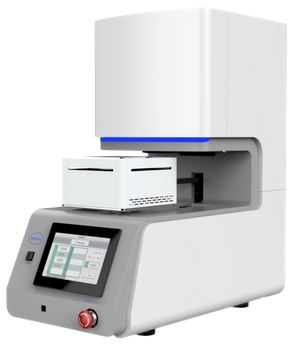
With decades of proven accuracy and reliability, we remain committed to providing high-quality testing instruments trusted by industries around the world.